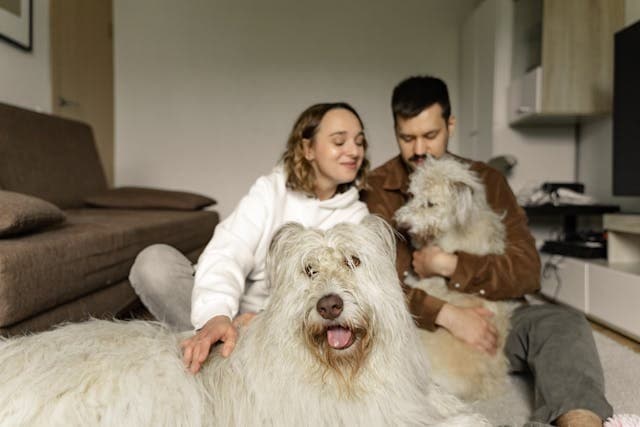

Come 1st May, many of your tenants will be asking you to have a pet in the property. I am not just writing this as the Founder of Pets Lets. I am also writing this as a landlord.
I look at tenants on a case by case basis. I like to use Open Rent as I like to meet the prospective tenants in person. I am a pet friendly landlord and many years ago was an Estate Agent in West London. My rental apartment is small, so it tends to be 1 cat or 1 dog on the premises.
You can say that financial references don’t tell you much about the tenants ‘personalities’, just whether they are financially secure. However, people can suddenly lose their jobs.
From my experience, people renting with a dog or cat in London and across the UK, for example, will probably look after the property more than sharers or students. Having 3 teenagers and a dog, there are some facts behind this comment!
A Shocking Statistic
1 in 10 tenants in the UK during 2025 have been hiding a pet from their landlords. Making sure there is no ‘pet evidence’ during a landlord inspection. This come off the back of a Landlord Today Survey which claimed that landlord refused 500,000 pet requests from tenants.
Now with the Renters Rights Act landlords cannot ‘unreasonably’ refuse a pet. They must have a good excuse to say no.
If your property is in a block with a no pets clause, then the freeholder or managing agent has the final say, which would be a no to pets. A landlord, as a leaseholder, has no say on the matter. The new laws don’t change that.
Landlords need to adapt.
Either way, landlords need to move away from knee-jerk “no” responses and start handling this properly. 50% of the UK population have pets
First Things First: You’re Not Being Forced
The Renters’ Rights Act introduces the concept of not “unreasonably refusing” a pet request.
But that doesn’t mean:
– You must accept every pet
– You lose control over your property
Your decision needs to be reasonable and evidence-based.
Here is a basic tenant with pet check-list to help you
Start With the Tenant. Not the Pet
If your tenant:
– Pays rent on time
– Looks after the property
– Communicates well
They are more likely to be a responsible pet owner.
Then Assess the Pet Properly. The tenants has asked to adopt a cat or dog. Ask the following. Do your own research about the breeds such behavioural patterns,.
Look at:
– Type
– Breed and size
– Age
– Number of pets
Treat each request case-by-case.
Check What You Can’t Control
- Head Lease / Building Rules
Flats may have no pets clauses which override your decision.
- Insurance
Check your policy for pet-related cover.
- Practical Suitability
Consider property size, outdoor space, and noise.
Avoid the Two Common Mistakes
- Blanket refusals
- Blind acceptance
If You’re Open to It. Set It Up Properly
– Add a pet clause to the rolling contract.
“It is further agreed between the Landlord and Tenant that the Landlord grants permission for the Tenant to keep a pet {insert animal type and breed} named {insert animal name} (“The Pet”) in The Property for the duration of the Tenancy. The Tenant agrees not to keep or permit to be kept on the Property any further pets or animals of any description without the previous consent in writing of the Landlord.”
– Specify type and number of pets
– Agree responsibilities
– Consider professional cleaning and inspections
What If the Tenant Already Has a Pet?
Don’t react aggressively.
Instead:
– Clarify the situation
– Formalise permission
– Put conditions in place
The Commercial Reality
Tenants with pets:
– Stay longer
– Value pet-friendly landlords
– Often take better care of homes
Being open-minded can be a competitive advantage.
The Bottom Line
Assess properly. Respond reasonably. Document clearly.
Handled well, this keeps good tenants and reduces voids.
Need Help Navigating Pet Requests?
At Pets Lets, we help landlords assess pet requests properly and reduce risk while keeping good tenants.
About the Author – Russell Hunt
Pets Lets Expert Insight
This article was written by Russell Hunt, co-founder of Pets Lets, a specialist service helping tenants secure pet-friendly property to rent in London and across the UK.
With more than 30 years of experience in the London property market, Russell works with tenants, landlords and estate agents to make renting with pets possible in practice, not just in theory. His work focuses on helping pet owners present strong applications, prepare properly for competitive markets, and navigate landlord concerns around pets.
Through Pets Lets, Russell supports UK tenants with pets as well as educates landlords with UK properties on the benefits of dog friendly rentals and cat friendly rentals in London and across the UK.
Russell also runs the community “Relocating to the UK with Pets”, helping thousands of members understand the realities of travelling to the UK with pets.
Learn more about pet-friendly renting advice and services at Pets Lets
For further guidance on renting with pets, visit Dogs Trust’s Lets with Pets
Get new advice by email
Join the list for practical updates on renting with pets.