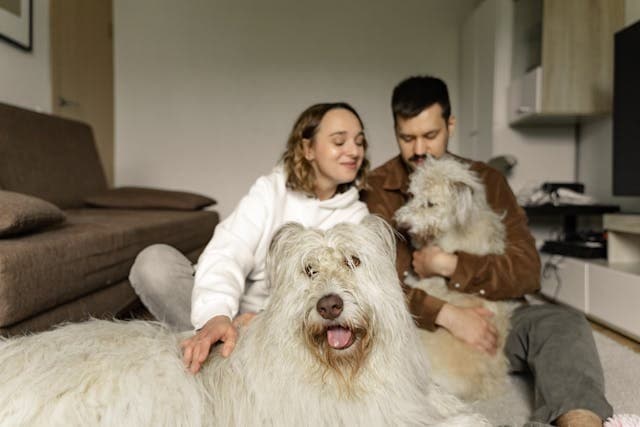

The short answer is no. You don’t automatically have to allow pets. But under the Renters’ Rights Act, you can’t ‘unreasonably refuse’ them either. And that’s where things get… interesting.
What Does “Unreasonably Refuse” Actually Mean?
We are talking about tenants who are already renting in your properties as well as those offer making offers.
Let’s break it down into 3 categories tenants wanting to rent with pets:
Tenants Already In Situ
So these are the tenants that have been paying rent for last few months or few years. Suddenly with The Renters Rights Act, they decide to adopt a dog or cat for example.
As a landlord are you going to just refuse a pet in the property. That same tenant has paid the rent on time and looked after the place. Or will you ‘hear them out’?
You can ‘reasonably refuse’ a pet, BUT you will have to have a good reason. Tenants who want to adopt a pet will have a right to take the matter forward with an Ombudsman (once it is set up).
In my opinion, I would listen to your tenants and don’t rush to ‘replace’ them. You’ve happy with them. There have been no issues.
Landlords, my advice would be to listen to your existing tenants on a case by case basis. Okay, 5 cats or large dogs in small flat might be too much. However, what about a small dog or a house cat?
Find out information about the breeds of the dogs and cats, weights, age, if it is not a puppy or kitten. Have your tenants had pets before? They might have grown up with cats and dogs and know what they’re doing. Just be open-minded to a tenants requesting to rent with a dog or cat.
Tenants In Situ and Hiding A Pet
Again, Landlords I would re-iterate what I have said previously. However, as a landlord myself, you would be more ‘suspicious’ as they have been hiding a pet.
When you recently did an inspection of the property. All the evidence had been hidden or when you asked about the dog bowl, they said it was a ‘one-off’ when a friend suddenly turned up at the door with their dog. They couldn’t turn their friend away. Whatever, the excuse.
Nearly a third of British Tenants Have been Hiding Pets for over 3 years and 27% of UK landlords had no idea their tenants had pets. And 38% of tenants ‘with pets’ felt uncomfortable about asking their landlords. That is sad considering pets are a big part of peoples lives. Most other European countries are more lenient when renting with pets.
However, have they been good tenants? Have they paid the rent on time and has the place been well looked after, even though they had hidden a pet in the property?
Yes landlord, you’re not happy, but they are say a ‘nice couple’. They seem too nervous to ask permission to have their dog or cat. Understandable. They had no idea how their landlord would react. They didn’t want to lose their home.
Better the ‘devil’ you know than starting the process of finding a new tenant, the costs and the ‘unknown’?
Tenants With Pets Offering On Properties
You property is listed on Rightmove or Open Rent. It’s a competitive market and as a Landlord you have received a few offers. Great position to be in.
With the Renters Rights Act, you are that bit more ‘nervous’ about who you chose as it is harder to evict tenants with the abolition of section 21. Tough call.
Landlord and Tenant Scenario.
You rent out a garden flat. You used to live there with your family and moved out for more space. You care about it more than a ‘rental’ and want it looked after. You have 3 offers on the table, all at asking price. With the new laws they can’t go above. All of them pass the affordability criteria .
- Lovely couple with small child. Have asked for the second bed to be removed and few touch ups. Want to take it 3 weeks after the availability date.
- Two young professionals with good references. Will take it as and can move in ASAP. No special conditions.
- Husband and wife. Relocating from the US with their companies. Solid references, a pet cv for their beagle dog and a glowing reference from a previous landlord. Will take it ASAP even though they won’t be in the UK for another 2 weeks.
As a landlord myself, I may well ask a few more questions. I have come across some landlords who do a zoom call. Maybe that is an option with technology.
Personally, I like to use Open Rent. Simply because I want to meet the perspective tenants in person or their representative or friend or family member.
In this scenario, there is emotion with this rental as it was the landlord’s home. You prefer the idea of a family but there would be a void period with no rent as well as works to be done.
Young professionals are appealing but how much will they be entertaining and will they look after the place? You just don’t know.
A company relocation with a dog. Prepared to take it early. Have come through a professional Relocation Agent .
I am biased when it comes to pets. However, in this case, I would lean more to the professional relocation with a dog. Every landlord would have their own opinion.
All I say is don’t automatically ‘feel forced’ with pets with the Renters Rights Act. Consider it because you like the tenants profile.
If a tenant requests a pet, you’ll need to:
– Consider the request properly
– Respond within a reasonable timeframe (commonly expected around 28 days for existing tenants)
– Provide a valid, evidence-based reason if you say no
– A blanket “no pets” policy without justification is likely to be challenged.
When Can You Say No to Pets?
There are still very valid reasons to refuse. For example:
– The building has a strict no-pets policy (e.g. head lease or management company rules)
– The property is clearly unsuitable (e.g. large dog in a small flat with no outdoor space)
– There are health or safety concerns
– Previous issues that are reasonable and evidenced
The key word here is reasonable. Not just preference.
What You Can’t Do Anymore
This is where many landlords need to adjust:
– Blanket bans without explanation
– Ignoring tenant requests
– Charging extra deposits beyond the legal cap (still 5 weeks)
– You can’t ask for an extra pet rent
– You can’t ask a tenant to take out insurance for their pet(s)
Also worth noting:
– You can’t ask for multiple months’ rent upfront under the new rules
– “Pet deposits” have been discussed but are not part of the legislation
So What Should Landlords Do?
The smart approach isn’t to panic and to adapt.
Here’s what works:
- Assess Pets Case by Case
Not all pets are equal. A 10-year-old Labrador is not the same as two untrained puppies.
- Ask for a Pet CV
Look for:
– Age, breed, temperament
– Training history
– References from previous landlords
– Vaccination status
- Use a Clear Pets Clause
If you agree, get it properly documented.
Include:
– Specific pet details (name, type, age)
– Expectations around damage, cleaning, and responsibility
- Look at the Bigger Picture
Tenants with pets often:
– Stay longer
– Treat the property like a home
– Value pet-friendly landlords
Final Thoughts
You’re not being forced to accept pets. But the days of automatically saying no are pretty much gone.
Landlords who take a practical, case-by-case approach will be in a much stronger position both legally and commercially.
Be open-minded. Yes, you or other landlords may have had bad experiences with pets. As a fellow landlord I have had bad experiences with sharers and even couples. I also let to renters with pets. As the property is small it tends to be 1 cat or 1 dog.
I see from experience with clients renting with dogs or cats, that they appreciate the property and look after it more.
At the end of the day, references only cover the financial side. As experienced landlords, you sometimes have to go with you ‘gut feel’.
Need Help Navigating This?
If you’re unsure how to handle pet requests, structure clauses, or assess tenants properly, this is exactly what we deal with every day.
At Pets Lets, we work at the intersection of landlords, tenants, and pets making it work for everyone.
About the Author – Russell Hunt
Pets Lets Expert Insight
This article was written by Russell Hunt, co-founder of Pets Lets, a specialist service helping tenants secure pet-friendly property to rent in London and across the UK.
With more than 30 years of experience in the London property market, Russell works with tenants, landlords and estate agents to make renting with pets possible in practice, not just in theory. His work focuses on helping pet owners present strong applications, prepare properly for competitive markets, and navigate landlord concerns around pets.
Through Pets Lets, Russell supports UK tenants with pets as well as educates landlords with UK properties on the benefits of dog friendly rentals and cat friendly rentals in London and across the UK.
Russell also runs the community “Relocating to the UK with Pets”, helping thousands of members understand the realities of travelling to the UK with pets.
Learn more about pet-friendly renting advice and services at Pets Lets
For further guidance on renting with pets, visit Dogs Trust’s Lets with Pets
Get new advice by email
Join the list for practical updates on renting with pets.