
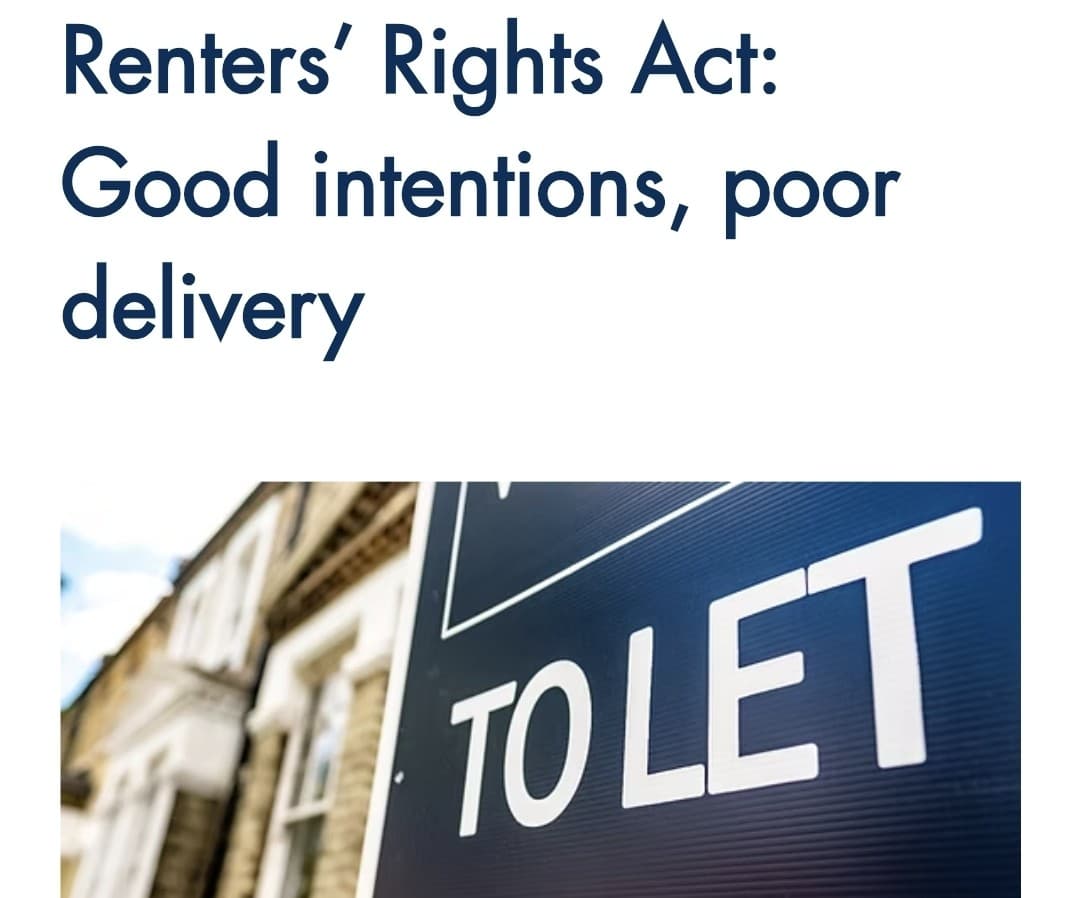
According to a recent poll some 44% of landlords and 64% of tenants say they are not confident about what will actually change now that the Renters Rights Act is in force.
Those figures don’t exactly inspire one with confidence. In my opinion, the laws have not been thought through clearly. Speaking to a large estate agency recently, they said how little the Government had listened to anything they suggested!
My Credentials
I help tenants with pets every day. I want more landlords to say yes to pets. But I’m also a landlord.
And right now, I don’t think the Renters’ Rights Act has got the balance right. It’s gone from one extreme to another. Before it was too biased to landlords and now far too biased to tenants. Why can’t there be a middle ground? Hardly surprising private landlords have been selling.
On paper, it sounds great. In reality, there are too many grey areas, contradictions, and unintended consequences. Especially when pets are involved.
Here’s where I think it falls down.
- What Does “Unreasonably Refuse” Actually Mean?
This is the big one. Landlords can’t “unreasonably refuse” a tenant’s request to have a pet. Sounds fair. But what does that actually mean in practice?
- Is a large dog in a small flat unreasonable?
- Is saying no based on past bad experiences unreasonable?
- What about furnished properties or high-end lets?
- What about the landlord being allergic to pets, so a blanket no to pets as it prevents them from entering their own property?
There’s no clear definition, and that’s the problem.
Landlords are left second-guessing themselves:
- “Will I be challenged?”
- “Am I taking a legal risk by saying no?”
And when people feel uncertain, they can just ignore it all and hope it ‘goes away’.
- Buildings Can Still Say No to Pets
This is where expectation and reality clash.
Even if a landlord is open to pets, the building itself can still block them.
- Head leases
- Freeholders
- Managing agents
All of these can override the landlord’s decision. So tenants are told one thing by the law…But face something completely different in reality. That disconnect is going to cause frustration on both sides.
- No More Paying Upfront – A Big Problem for Pet Owners
One of the biggest shifts is restrictions around paying rent upfront.
Previously, tenants with pets could strengthen their application by offering: “I’ll pay 6 months upfront.” That option is now largely gone.
So what happens? Pet owners, already seen as higher risk, lose one of their strongest negotiating tools.
This hits overseas tenants even harder:
- No UK income yet
- Strong savings
- But no way to use that to reassure landlords
It’s a real disadvantage in a competitive market. So, with a lot of US clients relocating to the UK with their pets, some are using their savings or are selling their US homes to fund renting.
Under the new laws, savings is not seen as the same as income and that inability to pay 6-12 months up front is removed. Also, as they are no longer fixed term tenancies, the contract is open-ended.
Had the government taken that into account? Doubt it.
- Private Landlords Selling Up = More Competition
We’re already seeing landlords exit the market. Not just because of pets but increased regulation, tax changes, and general pressure.
The result is simple:
- Fewer rental properties
- More tenants chasing each one
- Landlords with more choice. Why say yes to a pet, when you have lots of other tenants without pets offering.
Guess what, landlords tend to choose the easiest option. Agents are not going to ‘question’ their clients, especially if they own a property portfolio.
- Landlords Will Just ‘Ghost’ Pet Owners
Here’s the uncomfortable reality. If landlords feel they can’t clearly say no…They may just avoid engaging altogether.
Real Case Scenario
I saw a property recently in South West London for a US client relocating with their dog to London.
We offered just under asking. Response was “carry on viewings”. Offered asking price. Same response. No other offers.
I told the agent no thank you. Rude. Agent didn’t know what to say.
From a landlord’s perspective, it’s easier to sidestep the situation than risk getting it wrong.
So instead of improving transparency, we could actually see less of it.
No offence, but so many of these laws are ‘thought up’ by people with minimal experience in the day to day workings in the property sector.
- Pet Insurance
There’s been a lot of confusion around this.
Landlords CAN’T ASK tenants to take out specific insurance policies in the way originally proposed.
But in reality, many will still look for reassurance but can’t directly ask for it. How does that work?
- Proof of cover
- Protection against damage
- Clear responsibility
- A 5-Week Deposit Isn’t Enough
The 5-week deposit cap is meant to create fairness. But it doesn’t reflect real-life scenarios.
Different tenancies carry different risks:
- Pets
- Children
- Furnished vs unfurnished properties
Treating them all the same doesn’t quite work.
A more flexible approach could have been introduced, a simple solution which was ignored. I know I once sat on a House of Commons meeting to discuss. I suggested this and I got that ‘clueless’ look. Even the House of Lords suggested it and was rejected.
- Standard deposit = 5 weeks
- With pets = higher, agreed on a case-by-case basis or say 8 weeks.
Yes a bigger payment up front, but if no damage, you get your money back at the end of the tenancy. More protection for landlords. Clear cut, not ‘grey’.
- Too Many Loopholes, Not Enough Clarity
There’s that saying you can’t please everyone. Seems the Government has tried desperately to do so. Doesn’t work.
When you step back, this is the core issue.
There are too many grey areas:
- Undefined terminology
- Conflicting expectations
- Gaps between legislation and real-world application
And whenever that happens, people will find loopholes. Landlords are notorious for doing so.
Summary: Good Intentions, Messy Reality
The Renters’ Rights Act is built on good intentions. More fairness. More security. More opportunity for tenants, including those with pets. But the execution isn’t quite there.
What we’re seeing instead:
- Landlords feeling uncertain
- Tenants feeling frustrated
- A more competitive rental market as private landlords have been selling due to the new laws. Irony of it.
And potentially:
- More “silent” rejections
- Fewer genuine pet-friendly options
- A wider gap between policy and practice
My view?
Pets shouldn’t be a blanket yes or no. They should be assessed properly, case by case.
That’s where the real balance sits.
Call to Action
If you’re planning to rent in the UK with a pet, start the right way.
The Rent Ready Service (With Pets) gives you the clarity, strategy, and confidence to compete in today’s market, before you lose time, money, or opportunities.
About the Author – Russell Hunt
Pets Lets Expert Insight
This article was written by Russell Hunt, co-founder of Pets Lets, a specialist service helping tenants secure pet-friendly property to rent in London and across the UK.
With more than 30 years of experience in the London property market, Russell works with tenants, landlords and estate agents to make renting with pets possible in practice, not just in theory. His work focuses on helping pet owners present strong applications, prepare properly for competitive markets, and navigate landlord concerns around pets.
Through Pets Lets, Russell supports UK tenants with pets as well as educates landlords with UK properties on the benefits of dog friendly rentals and cat friendly rentals in London and across the UK.
Russell also runs the community “Relocating to the UK with Pets”, helping thousands of members understand the realities of travelling to the UK with pets.
Learn more about pet-friendly renting advice and services at Pets Lets
For further guidance on renting with pets, visit Dogs Trust’s Lets with Pets
Want the legal picture? Read the Renters’ Rights Act for pet owners.
Get new advice by email
Join the list for practical updates on renting with pets.